Gorilla Hormone

Summary
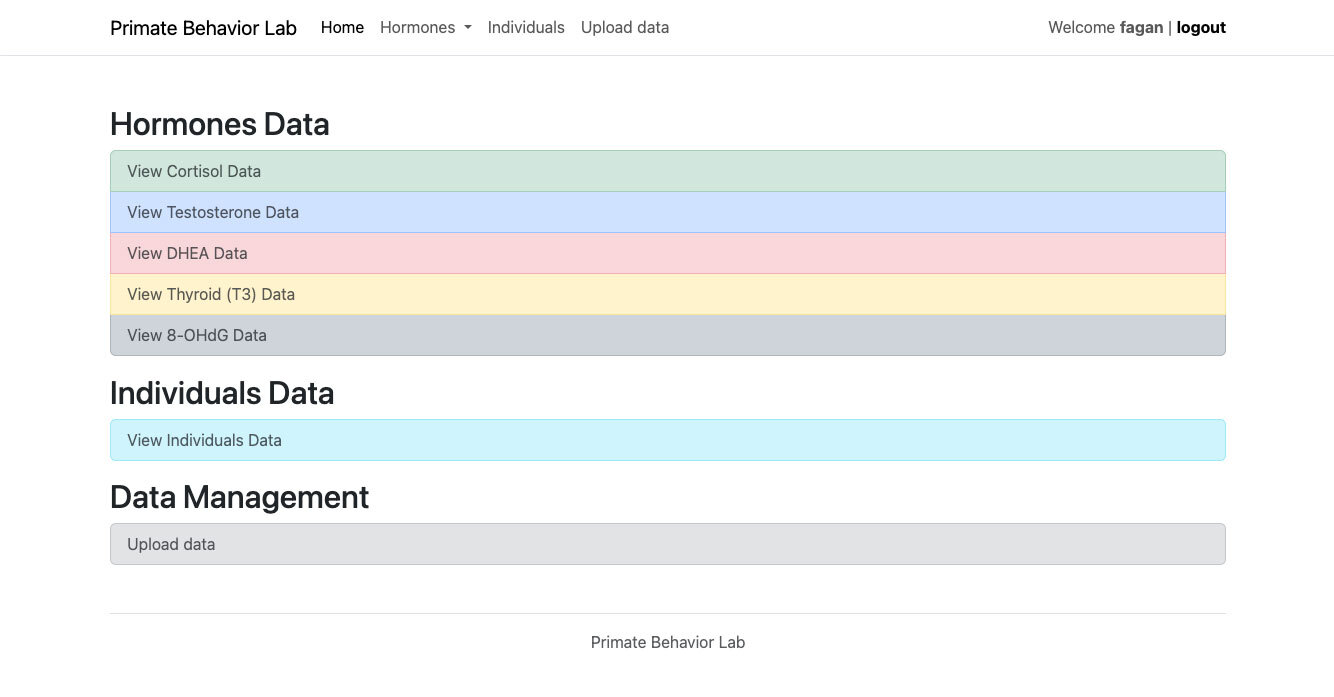
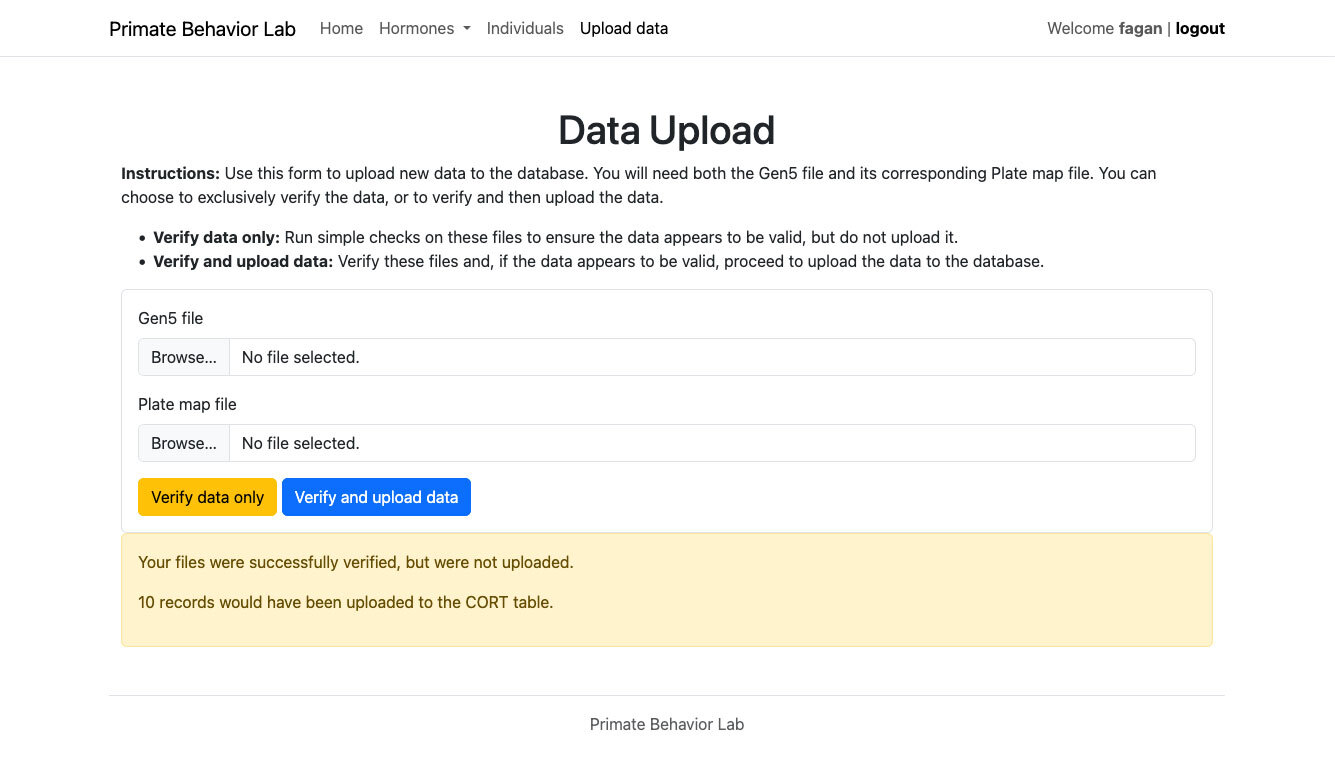
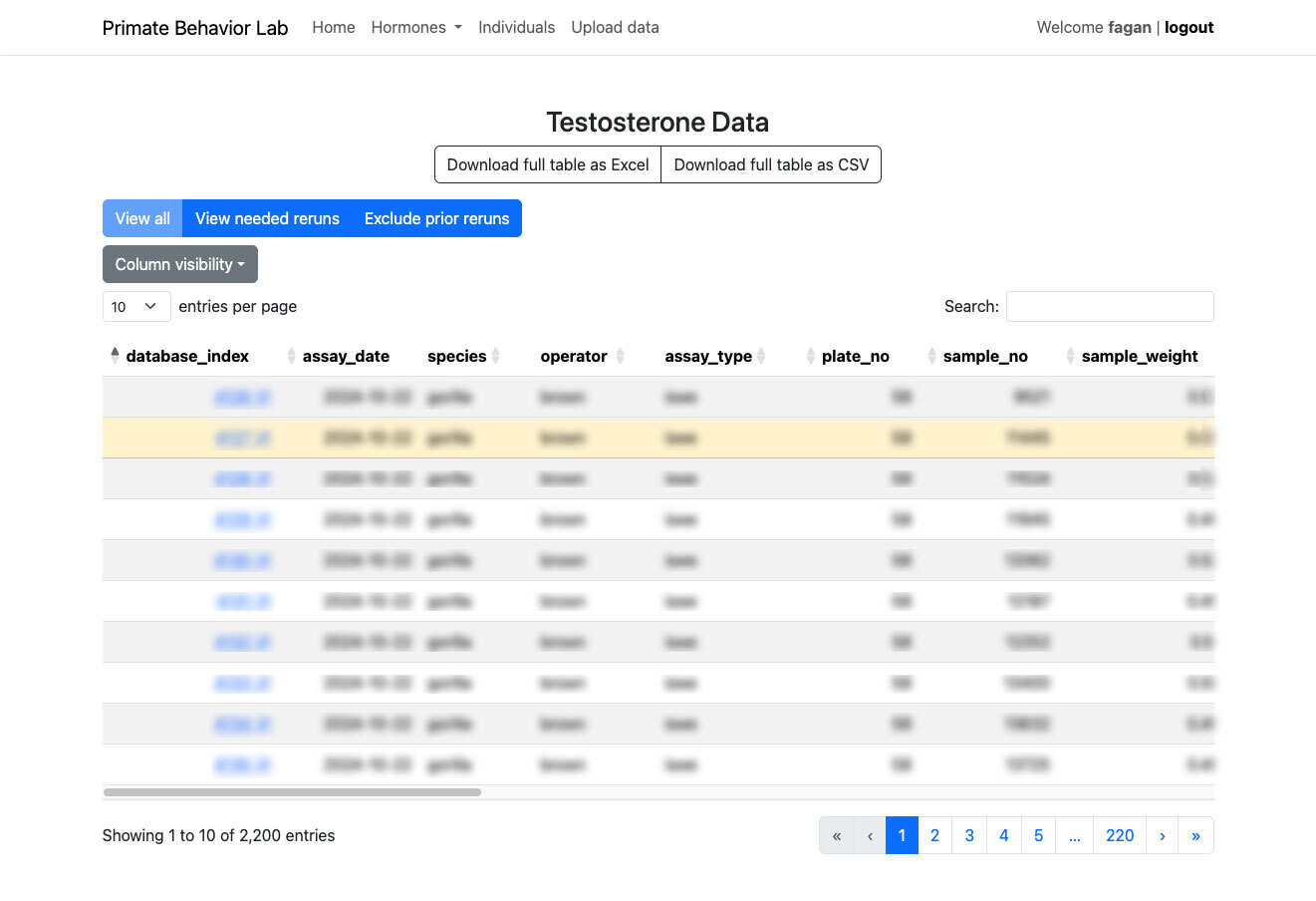
The UM Primate Behavior Lab studies the evolutionary causes and consequences of primate behavior and physiology, with much of its research focused on wild mountain gorillas monitored by the Karisoke Research Center in Rwanda. Gorilla Hormone is a data management web application that brings hormone assay results and other data about individual gorillas into a single, curated location for the lab. An early version of the application was prototyped by the lab but it lacked key functionality needed for use in production. The Research Software Engineering team worked closely with Dr. Stacy Rosenbaum and the Primate Behavior Lab to complete and enhance the site, adding a validated uploader for data coming from lab equipment, permissions-based editing, and views for sorting and filtering records.
Key Benefits to the Lab
- Centralizes research data and data collection workflows into a single, managed web application.
- Streamlines data intake with direct uploads from lab equipment, reducing manual handling and saving staff time.
- Improves data quality through built-in validation rules that catch errors early.
- Supports safe and controlled collaboration via permissions-based editing.
- Quality of life improvements to the user interface.
Details
Gorilla Hormone is a data management web application for the UM Primate Behavior Lab that organizes hormone assay results and related longitudinal field data about individual gorillas. It provides a centralized, permissioned environment where lab members can reliably ingest, manage, and review datasets that support ongoing research.
The application includes an upload pipeline for importing hormone data directly from lab equipment, with built-in validation checks to identify corrupted or unexpected values before they enter the database. Once data is uploaded, users can browse records through sortable, filterable views, and authorized members can edit records as needed. Gorilla Hormone also supports exporting data in formats such as Excel and CSV to enable downstream analysis, dissemination, and preservation.