Michigan Flora

Department

Herbarium

Lab

Herbarium

Summary

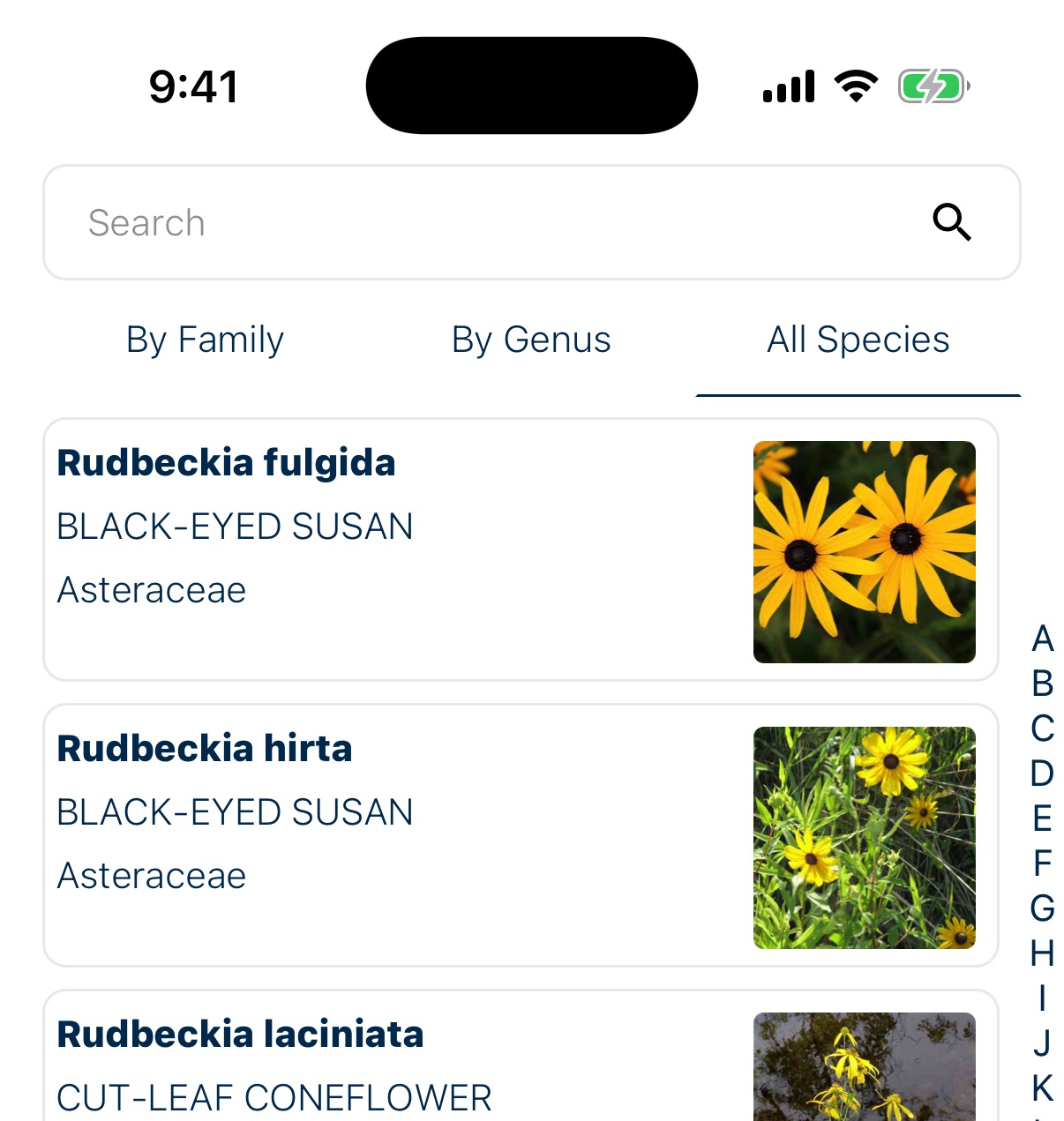
The LSA Herbarium curates and maintains a comprehensive database collection of known vascular plant species growing wild in Michigan, based on the Field Manual of Michigan Flora. The original Michigan Flora website serves as an “evolving illustrated companion to the Field Manual, presenting photographs of the species and their diagnostic features, and build on the foundation of the Field Manual by incorporating updates and new discoveries.” The original website has become quite dated, however, and increasingly difficult to use, update, maintain, and secure. The Research Software Programming team worked closely with Michigan Flora curators to design and develop an all new Michigan Flora website from the ground up.

Cell Image Identifier

Department

Molecular, Cellular, and Developmental Biology

Summary

A graduate student was doing a project that necessitated identification of individual cells and their nuclei in microscope fluorescence images and quantification of image characteristics within the cell/nuclei areas. With hundreds of cells per image, tens to hundreds of image layers per 3D exposure, and many exposures for the entire experiment, the process of manually tracing each cell and nucleus area in each image using the ImageJ analysis software was incredibly time consuming. Our group worked closely with the lab to develop a program that would automatically identify, outline, and number the cell and nucleus areas, as well as perform the desired analysis, saving the lab countless hours of work.

Enhancing An Ecological Network Dynamics Simulation

Department

Ecology and Evolutionary Biology

Summary

The principal investigator (PI) wanted to incorporate a feature from a predator-prey dynamics simulator written by a colleague for a recent project into a plant-pollinator dynamics simulator the PI developed for an earlier paper. The team was able to help the PI identify and overcome a critical design problem that stood in the way of adding the desired feature to her program.

Interactive Language Learning Experiment

Department

Linguistics

Summary

The researcher wanted to use an online platform to run an interactive experiment with two subjects remotely. The experiment needed to teach both subjects the words of a new language and then allow the subjects to describe images to their partner using the new language in a web browser. The Research Software Programming team was able to adapt the existing version of the researcher’s experiment to implement an online, multi-subject version using the LIONESS Lab platform.

Monkey Database

Department

Psychology

Summary

The lab conducts many studies on the same population of monkeys and collects all of their data in Excel Worksheets. This works well for analyzing individual studies, but they needed a system for tracking subjects across multiple studies to compare their performance at different tasks. To help with this we created a database with a custom R library for adding and accessing census and study data. For lab members that are not familiar with R, or just want to quickly browse the data we created a website using R-Shiny.

Multi-Monitor Environment Display and Tracking

Department

Molecular, Cellular, and Developmental Biology

Summary

The principal investigator (PI) wanted to be able to surround a mouse with a 4-walled display of synchronized striped patterns for behavioral experiments, and to sync the history of these displays with her neural and video recording system. The Research Software Programming team developed a MATLAB program to display the desired patterns on a set of four computer monitors arranged as a box, controlled by a fifth monitor, with additional signals wired from the computer to the recording system to track the timing and types of patterns displayed.

Qualtrics Information Environment

Department

Political Science

Summary

The researchers had created a Qualtrics survey to probe the participant’s voting preferences. However, the way this information needed to be displayed and the data the researcher needed to collect was not possible in a standard survey. The Research Software Programming team was able to help create a custom information environment embedded in the Qualtrics survey using Javascript and custom HTML.

Spectroscopy Equipment Control and Timing Integration

Department

Chemistry

Summary

The lab wanted to run experiments that involved taking spectroscopy measurements at a large number of intervals of movement of a delay line stage. This required running separate control programs for the spectroscope and the delay line, with a lab worker manually tending the experiment the entire time to trigger each delay line stage move and subsequent spectroscope measurement, an extremely tedious and time-consuming process. The Research Software Programming team developed a program to control both pieces of equipment, automating this experimental process. The program allows extensive configuration of the experiment parameters, as well as the analysis and display of the results, all in a single piece of software.

Sweat Sensor

Department

Chemistry

Summary

The lab needed a way to track color changes in a selected area, and was also interested in prototyping a wearable device that could handle the same task. They explored existing apps, and could not find anything that would meet their needs, so we created a small, custom iPhone app to handle their data collection.

Wearable Data Analysis Platform

Department

Math

Summary

The lab needed data to refine and test their Circadian Rhythms Models, so our group created iPhone and Android apps that allowed users to donate their heart rate and step data and get an analysis back from the lab in return. The smartphone sends data to a server/database, and it is processed by multiple algorithms, some of which generate reports for the users.