Aerosol Analyzer
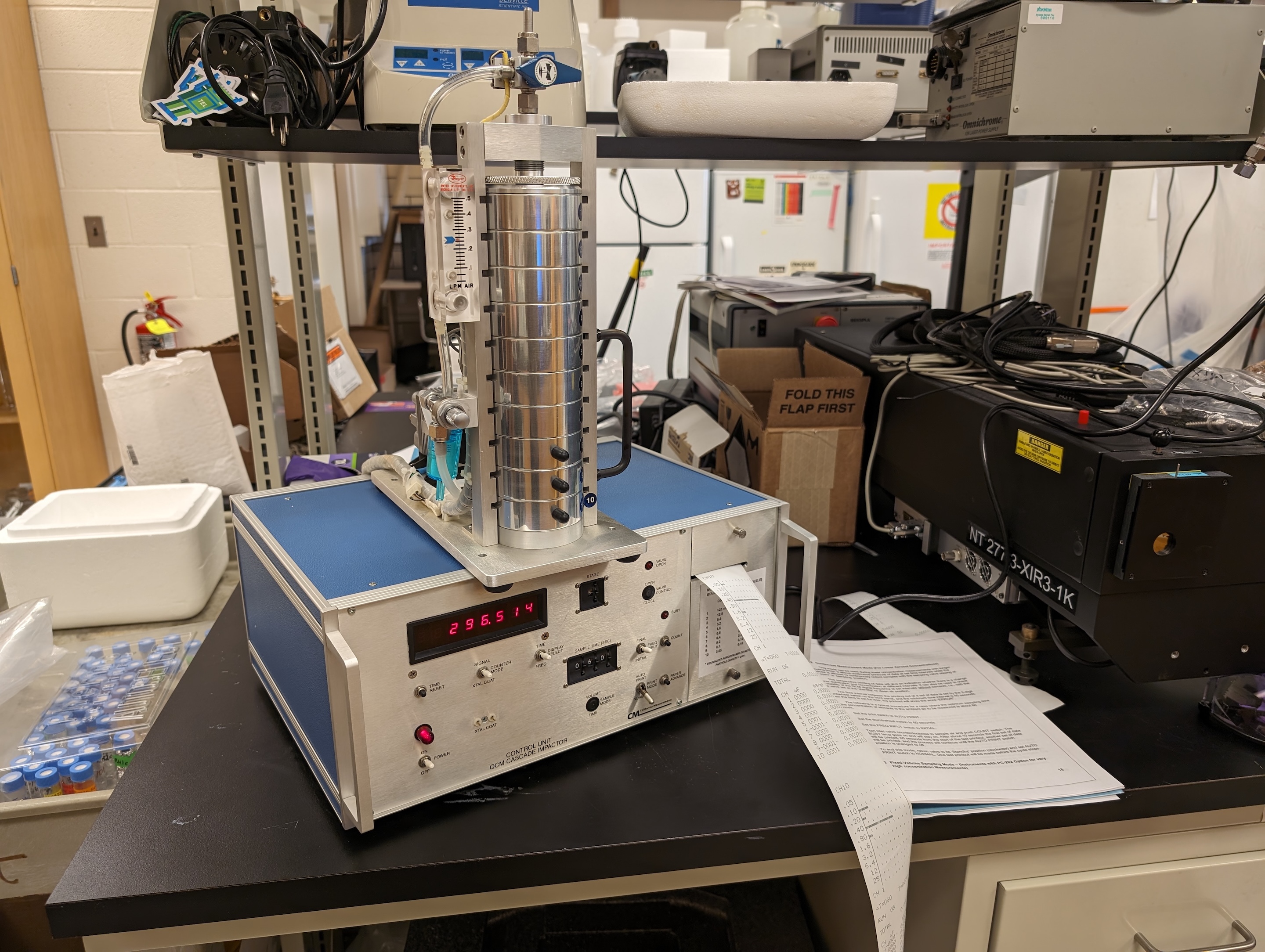
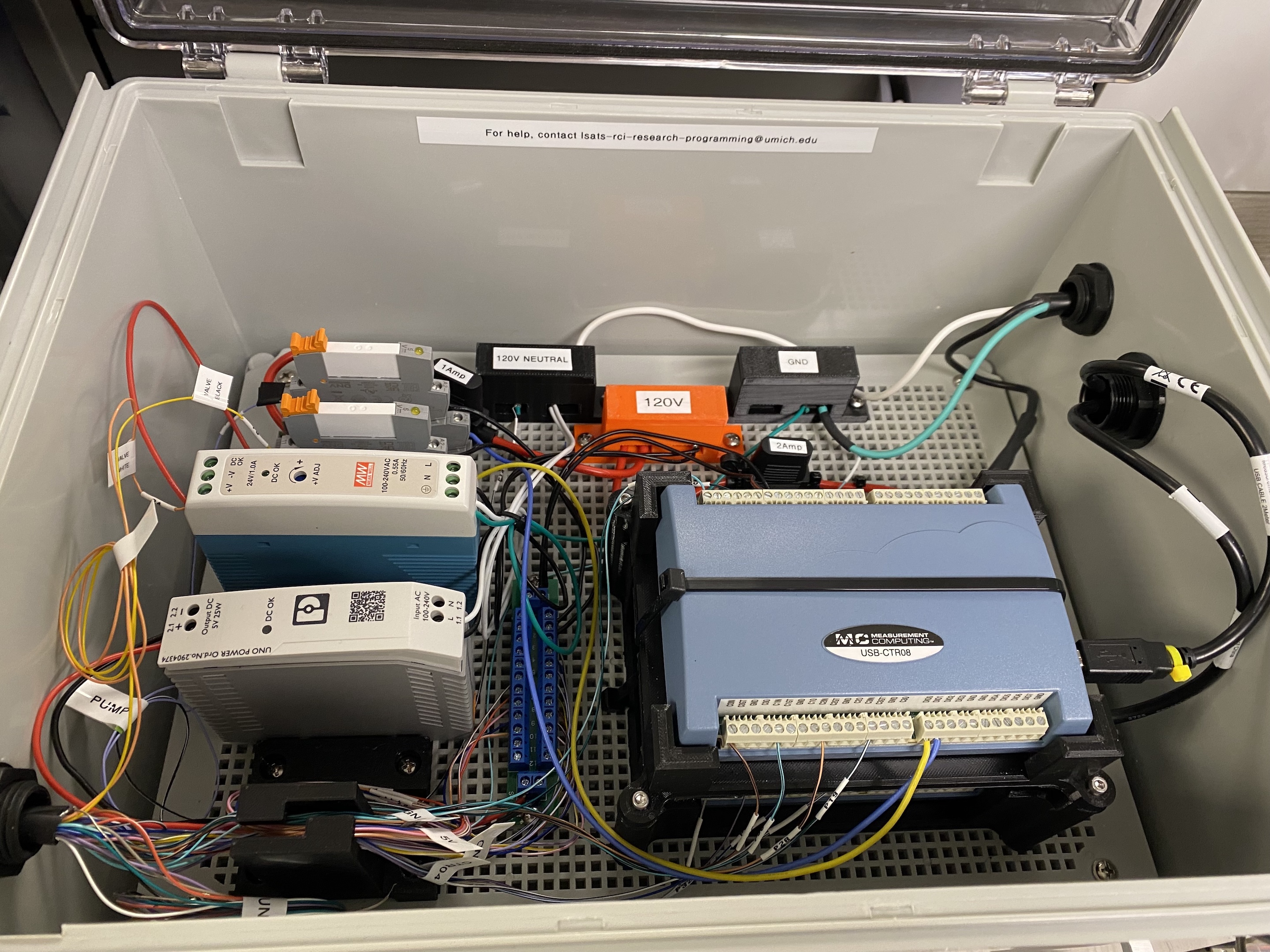
Principal Investigator Andrew Ault of LSA Chemistry sought to modernize the QCM Cascade Impactor, an Air Particle Analyzer used to measure aerosol concentrations. The original instrument was a decades-old analog system that presented significant limitations: it offered no flexible control over sampling parameters, provided no real-time feedback during operation, and outputted data solely on printed receipt tape. To address these issues, the development team engineered a complete digital overhaul. By integrating Digital IO cards and relays with a custom LabVIEW application, the team replaced the obsolete controller with a system that enables precise instrument control, real-time frequency monitoring, and the generation of electronic results for easy analysis.
Key Benefits to the Lab
- The new interface visualizes frequency readings in real-time, enabling dynamic, data-driven control of the sampling workflow.
- By replacing thermal receipt paper with electronic data logging, the lab can now easily export, analyze, and archive results without manual transcription errors.
- The integration of digital relays allows the software to toggle the pump and valves automatically, offering precise control over airflow and sample timing.
- The system allows users to store a "Clean Crystal Frequency" baseline and compare it against current readings. This makes it easier for researchers to identify when a crystal has reached its saturation limit and requires cleaning.
Details
The original QCM Cascade Impactor operated as a static analog system, where airflow and measurement timing were manually switched and data was buried until the end of a run. To enable the flexible digital control requested by the PI, the team completely bypassed the original control unit, designing a new modular hardware architecture. We utilized modern Digital IO cards to handle the high-speed counting required for the measurement stages. These were paired with industrial relays and power supplies, effectively handing control of the pump and valves over to the computer. This shift from physical switches to software-driven relays was the foundation for automating the flow rate and sampling duration.
The primary challenge was the "blind" nature of the Quartz Crystal Microbalance (QCM) sensors, which originally hid particle accumulation data until a post-run receipt was printed. The team's LabVIEW application bridged this gap by processing the crystal oscillation signals in real-time. This immediate feedback allows researchers to monitor concentration levels live and stop the experiment exactly when a valid sample size is reached, eliminating the guesswork of the analog era.
To handle the significant data throughput of simultaneous frequency counters without freezing the user interface, the team implemented optimization techniques to throttle the display updates. This balance ensured the researcher saw smooth, "live" data without interrupting the critical timing loops of the hardware. Additionally, the move to digital allowed for better instrument health tracking. The software now records baseline frequencies for clean crystals, allowing users to easily spot when a crystal has drifted near saturation—a task that was previously manual and prone to error. The result is a fully modernized instrument that retains the reliable physics of the original hardware while offering the flexibility and logging capabilities of a modern lab tool.